
· by Michael Blair, Nashville's Deck
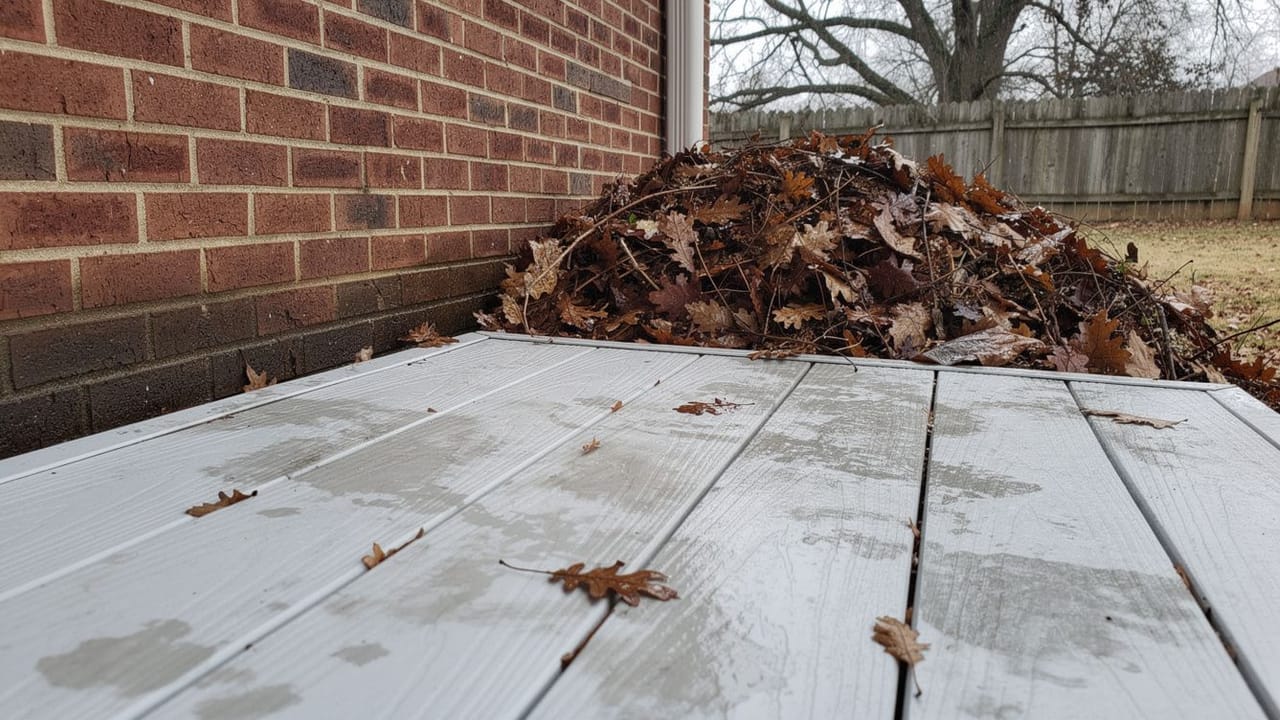
Most of the leaves that land on a Middle Tennessee deck come down in the fall, and a deck under a couple of mature oaks can end up buried in them. We worry less about dry leaves that blow around and off again than about the wet mat that forms when they sit through a few rains. That mat stains the boards, keeps the surface damp long enough for mildew to take hold, and packs into the gaps that are meant to let water through. On a composite deck the stain is usually what people notice first, but it’s the least of the three.
What do wet leaves do to deck boards?
Leaves and other debris left lying on a deck can stain it. Trex’s care and cleaning guide gives tannins due to debris an entry of their own, and says tannin leaching occurs naturally in its boards and in all wood-based products. The mark forms where the debris sat, so a leaf that lay on a light board through a rain can leave its own brown outline behind.
Moisture is the other half. A leaf mat stays wet underneath after the open boards around it have dried, and the EPA’s brief guide to mold and moisture is plain that no mold will grow without water or moisture. Its rule of thumb, written for leaks indoors, is that damp materials dried within 24 to 48 hours usually won’t grow mold; a pile of leaves in a corner can keep the board under it damp for much longer than that. Trex makes the same point about its own decking, saying mold can feed on the film left when pollen and dirt stay on the surface for an extended time, which is why it asks owners to clean every spring and fall.
Why do the gaps between deck boards matter?
We space deck boards so rain runs straight through instead of standing on the surface, and so the frame underneath can dry out between storms. Every deck we build, composite ones included, sits on pressure-treated wood framing. Leaves and the grit that comes with them pack into those gaps, and once they’re blocked, the water that would have run through has to wait on the boards and the tops of the joists until it evaporates. EPA’s mold course lists wood among the materials mold grows on whenever moisture and oxygen are present, and warns that a moisture problem left long enough is likely to end in structural damage, with molds weakening floors and walls by feeding on wet wood.
The same debris collects where the deck meets the house. The ledger is the board that fastens the deck to the house, and we flash it so water running down the wall goes over that joint instead of behind it; our post on the part of a deck that actually fails explains why that connection gets so much of our attention. A drift of wet leaves sitting on the flashing all winter works against it, so it’s the first stretch we clear. If the boards or framing near it have already gone soft, that becomes deck repair, and Metro Nashville Codes requires a permit for any replacement of deck footings or framing, and for replacing more than 100 square feet of deck boards.
Clearing leaves without scratching
On composite we use a leaf blower, because nothing touches the boards. Trex tells owners to remove debris with a hose or a broom and never to use a metal snow shovel on its decking, since a shovel can scratch it and that damage isn’t covered under the warranty. We keep metal rake tines off composite for the same reason. Clearing after each heavy drop, rather than once at the end of the season, means a mat never gets the chance to form.
Once the trees are bare, clean out the board gaps. A putty knife or a thin gap-cleaning tool pulled along each seam lifts out what has packed in, and a rinse with a garden hose afterward shows where water is still sitting. On a low deck we look underneath as well, because leaves blow in and pile against the posts and the lowest joists, where nobody sees them until spring. Look up, too: the EPA’s mold and moisture guide counts cleaning and repairing roof gutters regularly among its basic moisture-control steps, and a clogged gutter above a deck empties onto it.
- Blow leaves off after each heavy drop, especially before rain
- Move planters, rugs and furniture so boards under them can dry
- Clear the board gaps once the trees are bare
- Keep the ledger flashing and the area against the house clear
- Clean the gutters above the deck so they do not overflow onto it
How do you get tannin stains off composite?
Trex’s instructions for tannin stains from debris are short: clear the deck with a hose or broom, let it dry, then apply a deck brightener as its maker directs. Brighteners contain oxalic acid, which Trex says will also remove tannins. The same guide warns that products containing bleach or acid will lighten the surface of its boards and says to try them somewhere inconspicuous first, so start under the grill or a chair. It limits a pressure washer to 3100 psi with a fan attachment and says going higher could damage the boards and void the warranty. On another brand of composite, that maker’s own care instructions come first. On wood we deal with tannin marks as part of cleaning the whole deck, in the order set out in our post on cleaning and sealing a deck.
Time does some of the work. Trex tells owners to allow at least 12 weeks of normal weathering for tannin staining and says a brightener can hurry it along, so a faint mark may not need anything at all. When we look at a deck in the fall, the stains are cosmetic; the blocked gaps and a buried ledger are what we point out first. If you’d like us to walk yours, ask us for a free written estimate.
Sources
- Trex, Care and Cleaning — Tannins due to debris; tannin leaching in Trex and all wood-based products; at least 12 weeks of weathering; oxalic acid brighteners remove tannins; bleach or acid lightens the surface; test an inconspicuous area; hose or broom for debris; no metal snow shovel, scratches not covered; pressure washer no greater than 3100 psi; spring and fall cleaning against mold
- U.S. EPA, A Brief Guide to Mold, Moisture, and Your Home — No mold grows without water or moisture; materials dried within 24 to 48 hours usually do not grow mold; clean and repair roof gutters regularly
- U.S. EPA, Mold Course Chapter 2: Why and Where Mold Grows — Mold grows on wood and other organic material where moisture and oxygen are present; unaddressed moisture leads to structural damage as molds feed on wet wood
- Metro Nashville Codes, Add a Deck or Patio to a Residence — Permit for any deck footings or framing replacement and for deck board replacement above 100 sq ft
FAQ
Fall Leaves, Tannin Stains and Your Deck — questions
Do leaves stain composite decking?
They can. Wet leaves and other debris left on composite can leave tannin stains. Trex says tannin staining fades with at least 12 weeks of normal weathering and that a deck brightener containing oxalic acid can speed that up. Try any product in an inconspicuous spot first, since Trex warns that acid products lighten its surface.
Can I use a rake on a composite deck?
Trex recommends a hose or broom for debris and warns that a metal snow shovel can scratch its boards, damage its warranty does not cover, so we keep metal rake tines off composite. A leaf blower clears leaves without touching the surface at all.
Should I leave leaves on my deck over winter?
No. A wet leaf layer holds moisture against the boards, and the EPA notes that mold will not grow without water or moisture. Leaves packed into the gaps between boards also keep rain from running straight through. Clearing them after each heavy drop through the fall is enough.
What are tannin stains on a deck?
Brown marks left where wet leaves or other debris sat on the boards. Trex says tannin leaching happens naturally in its boards and in every wood-based product, so one leaf lying on a light board through a rain can print its own outline. We treat them as cosmetic; blocked gaps and a buried ledger matter more.