
· by Michael Blair, Nashville's Deck
The ground usually settles this before taste does. A patio wants reasonably level ground, and where the yard falls away from the back door a deck reaches the door without the ground being built up first. In Davidson County the two are also treated differently by Metro Codes, which is worth knowing before anyone picks a material.
Does a flat yard call for a deck or a patio?
On a flat or gently sloping lot, a patio is the simpler build. It rests on the ground instead of on footings and framing, and Metro Codes’ list of projects that may or may not require a permit requires one for a new patio only when it sits more than 6 inches above average grade. A deck has no such exemption. Metro’s page on adding a deck or patio to a residence says a new deck requires a permit, and so does replacing an old one.
On a steep lot, or where the back door sits well above grade, a deck spans the drop on posts and footings, which is the work on our new decks page. A patio raised toward door height loses its permit advantage once it passes those 6 inches, and the walls that would hold the fill are a question neither Metro page answers. On a sloped yard we put that question to Metro Codes at the start. Our post on deck permits in Nashville walks through the deck side of the process.
Either one adds footprint and means digging. Metro Codes’ deck page recommends contacting Metro Stormwater any time the footprint on a parcel grows, which is the first call to make on a yard that already holds water, and it asks that Tennessee 811 be contacted at least three working days before a project starts.
Which needs less upkeep, a deck or a patio?
A patio asks little of its owner. Pavers may need resetting and concrete may need sealing or crack repair, but there is no framing and no connection to the house to look after, so we count it as the lower-upkeep choice.
A deck is a structure left out in the weather, with fasteners, framing and, if it is attached, a ledger board fastened to the house. We check that connection first on any deck we look at, and our post on the part of a deck that actually fails explains why. Repairs bring Metro back in as the deck ages: according to Metro’s deck permit page, replacing more than 100 square feet of deck boards needs a permit, and replacing any footing or framing does too.
- Flat lot: patio, the simpler build with less to maintain
- Patio more than 6 inches above average grade: a Metro permit, the same as a deck
- Sloped lot or raised door: deck
- Yard that holds water: call Metro Stormwater before adding footprint
- Shade and heat: plan cover for either one
Resale in this market
We have not found Middle Tennessee resale figures that settle deck against patio, so we do not quote one. In our experience a deck of unknown age draws questions from a buyer’s inspector, and the ledger is usually where they start.
A well-built deck with its permit on file is an asset. Because Metro requires a permit for every new deck, one that a previous owner added without one is a fair question for a buyer to raise, and it can turn into a negotiating item.
Is there a middle ground between a deck and a patio?
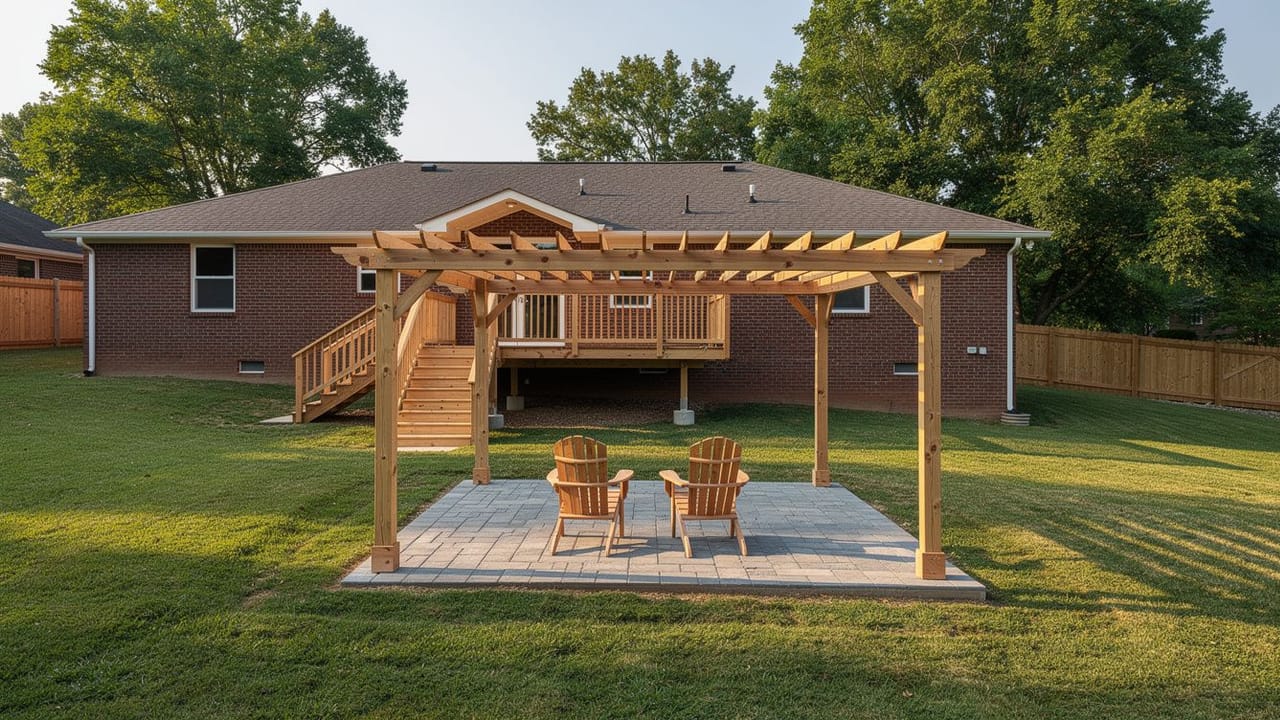
A low deck close to the ground, or a patio with a pergola over it, often gives people what they were after in the first place: outdoor space they use, with some shade. The pergola does not change the permit picture by itself, since Metro’s permit list marks pergolas, arbors and trellises as needing none. A roof over a deck is another matter. Metro Codes lets an uncovered deck take a reduced 10-foot rear setback, while a covered deck must meet the full rear and side setbacks. If you want a roof, our covered patio page shows how we tie one into the house.
Shade matters more here than square footage. The EPA puts the reason in general terms in its explainer on heat islands: hard, dry surfaces such as sidewalks and parking lots provide less shade and moisture than natural landscapes, and that contributes to higher temperatures. An unshaded slab in a Nashville July sees little use in our view, however big it is. Our post on building a pergola that gives real shade covers the cover itself, and once you know which way your lot leans, ask us for a written estimate on either one.
Sources
- Metro Nashville Codes, Building Permits Central: I Want to Add a Deck or Patio to a Residence — New or replacement deck requires a permit; board replacement over 100 sq ft and any footing or framing replacement need one; uncovered decks 10-foot rear setback, covered decks full rear and side setbacks; contact Metro Stormwater when footprint grows; Tennessee 811 three working days before digging
- Metro Nashville Codes, List of Building Projects Which May or May Not Require a Permit (2022) — New patio needs a permit if more than 6 inches above average grade; decks need one; pergola, arbor and trellis need none
- U.S. EPA, Learn About Heat Islands — Hard, dry surfaces provide less shade and moisture than natural landscapes and contribute to higher temperatures
FAQ
Deck or Patio for a Nashville Back Yard — questions
Which adds more value, a deck or a patio?
We have not found Middle Tennessee figures that answer it, so we do not promise either. In our experience a patio raises fewer questions at sale because there is less to inspect, and a deck holds up best where the grade makes a patio impractical and its permit and condition are documented.
Is a patio cheaper than a deck?
On level ground a patio is usually the simpler build, since it rests on the ground rather than on footings and framing, and Metro only requires a permit for a new patio more than 6 inches above average grade. On a sloped lot that advantage shrinks, because a patio built up toward door height needs fill to hold it and, past those 6 inches, a permit like a deck. We price both on the actual lot before recommending either.
Do I need a permit for a patio in Nashville?
In Davidson County, Metro Codes requires a permit for a new patio more than 6 inches above average grade, and a deck needs one whether it is new or a replacement. A pergola, arbor or trellis on its own needs no permit, but a covered deck must meet the full rear and side setbacks. Metro’s deck guidance does not cover retaining walls, so on a sloped lot ask Metro Codes before you build. Outside Davidson County, ask that county or city’s codes office.
What is the difference between a deck and a patio?
A patio rests on the ground, while a deck stands on posts and footings and, when attached, hangs from a ledger fastened to the house. On level ground that makes the patio the simpler build with less to maintain, and on a sloped lot the deck is how you reach a raised back door.