
· by Michael Blair, Nashville's Deck
Middle Tennessee summers are hot, and a patio that takes the afternoon sun with nothing over it is hard to sit on in exactly the hours people picture using it. According to the National Weather Service’s heat index page, heat index values assume shade and a light wind, and full sunshine can raise them by up to 15°F. That is why we put siting and shade ahead of size or finish.
Orientation first
When someone asks us to look at a patio nobody uses, we go out at the hour the owner would want to be sitting there and watch where the sun lands on the chairs. That visit tells us more than a site plan does, and it is the first thing we do before drawing anything new.
Where the position is fixed by the house, shade is the fix. We check that the cover still shades the seating at the end of the day as well as at noon, and add a side screen or a deeper overhang where it does not. If a pergola is the plan, our post on a pergola that gives real shade goes through slat direction and spacing.
What shade works on a patio in July?
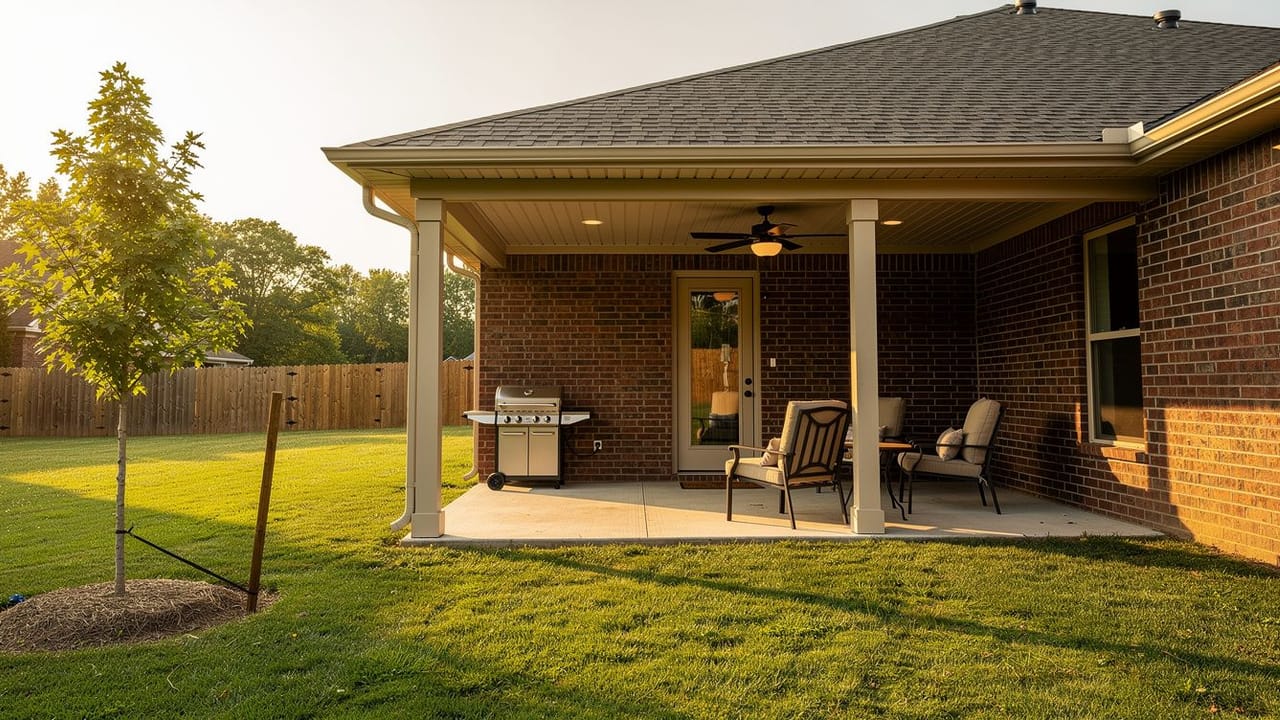
Over the seating itself we would rather build a solid or louvered roof, or a deep overhang, than rely on an open pergola alone. Our covered patio work ties that roof into the house with the same flashing care we give a deck ledger.
Trees help as well. The EPA’s page on trees and vegetation says trees and other plants have a natural cooling effect and calls vegetation a simple and effective way to reduce heat islands. A young tree is a long wait for shade, so we plant one alongside a built cover rather than in place of it.
The ground underfoot counts too. In a pilot study in Arizona, conventional paving such as asphalt reached surface temperatures up to 152°F at midday while cool pavements stayed 10 to 16°F cooler, according to the EPA’s page on cool pavements, which describes them as paving that reflects more solar energy. When we choose pavers for a sunny patio, how much sun they reflect is part of the conversation.
- Check the sun at the hour you will actually sit there
- Solid or louvered cover over the seating area
- Shade trees planted alongside built cover
- Paving that reflects more of the sun
- Ceiling fan under any covered section
Airflow and insects
Under any covered section we run power and a fan-rated box for an outdoor-rated ceiling fan while the framing is still open. Adding one after the ceiling is finished means cutting into it, and on a still August evening moving air over the chairs is worth having.
We do not sell a fan as mosquito control. If insects are what keeps you indoors on summer evenings, a screened porch is the answer we would give, and it can be built over an existing deck or under a new roof.
Which months are hardest on a Nashville patio?
July and August are the hard months. The National Weather Service’s Nashville climate records give a normal July high of 90.9°F at the airport, with 17 days at or above 90°F in an average July and 14 in August, and 47 of the year’s 49 such days fall between June and September. So we design for the cooler months on either side of that stretch as much as for the peak of summer.
For cool evenings the piece we add is a fire pit or an outdoor fireplace. Metro Nashville’s Fire Marshal’s Office works under the 2024 International Fire Code with local amendments, according to its code editions page, so we confirm clearances with that office before we set one. A fire feature is not a place to burn yard waste either: the Fire Marshal’s FAQ answers no to a burn permit for brush or leaves in a yard. If you want us to look at a patio that sits empty, ask us for a free written estimate.
Sources
- National Weather Service, Heat Index — Heat index values were devised for shady, light-wind conditions; full sunshine can raise them by up to 15°F
- National Weather Service Nashville, Nashville Climate Records (BNA) — July normal high 90.9°F; average days at or above 90°F by month (June 10, July 17, August 14, September 6; 49 a year)
- US EPA, Using Trees and Vegetation to Reduce Heat Islands — Trees and plants have a natural cooling effect; vegetation is a simple and effective way to reduce heat islands
- US EPA, Using Cool Pavements to Reduce Heat Islands — Cool pavements reflect more solar energy; Arizona pilot: asphalt up to 152°F at midday, cool pavements 10 to 16°F cooler
- Metro Nashville Fire Marshal’s Office, NFD Code Editions — Adopted code: 2024 International Fire Code and 2024 NFPA 101 with local amendments
- Metro Nashville Fire Marshal’s Office, Frequently Asked Questions — No burn permit for brush or leaves in a yard; bonfire permits come from Metro Health
FAQ
Why Your Patio Goes Unused From June to September — questions
What is the best direction for a patio in Nashville?
It depends on the hours you will use it. We look at where the sun falls on the seating at those hours and, where the lot allows, put the chairs where the house itself shades them late in the day. On a lot where the house sets the position, cover over the chairs decides whether the patio gets used.
Does an outdoor fan actually help in humidity?
We wire for one under any covered section, but we cannot put a number on how many degrees it is worth, and we would not count on it to keep mosquitoes away. The National Weather Service figures for how hot it feels are worked out for shade, and it warns that sitting in full sun can push that number up by as much as 15°F, so we put shade first and the fan second.
Is an outdoor kitchen worth building here?
We plan a cooking area in shade and close to the kitchen door, so food and dishes do not make a long trip across a hot yard. Before a full outdoor kitchen, a covered grill spot near the door is where we would usually start, and it can grow from there if it gets used.
How do you design an outdoor space people will use?
Start with the sun at the hour you will sit there, then put a solid or louvered roof or a deep overhang over the seating. Plant shade trees alongside it, choose paving that reflects more sun, and wire for an outdoor ceiling fan while the framing is open. A fire pit stretches use into cool evenings.